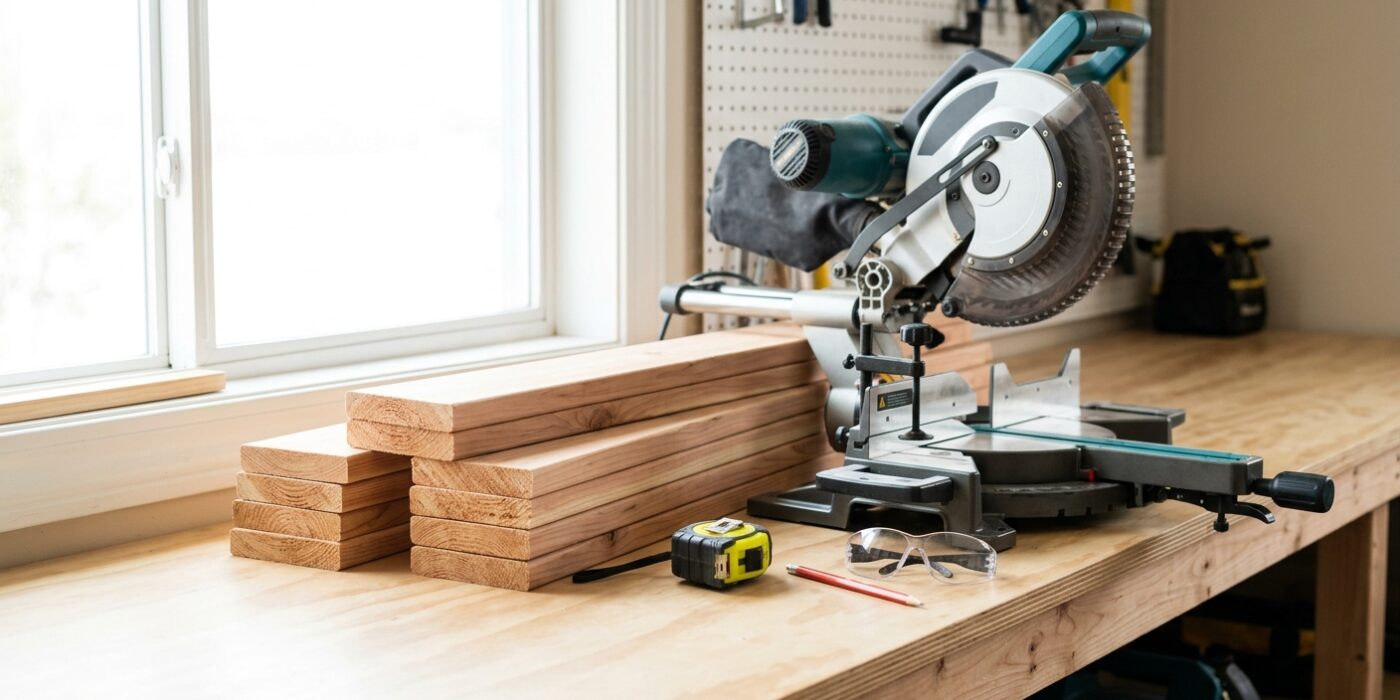
Project Shopping List
A window box planter brings color to any exterior window and is one of the simplest weekend projects with immediate visual impact. A cedar or redwood box built to match the window width and mounted correctly on exterior brackets will outlast every retail plastic planter while looking significantly better.
What You Need
- Cedar or redwood 1×6 boards (sides, front, back, bottom)
- 1×2 cedar for drain strips (bottom spacers)
- Exterior screws (1-1/4 and 2-inch)
- Window box brackets (L-brackets rated for 50+ lbs)
- Drill, circular saw, level
- Exterior wood finish (oil or sealer)
- Drain rock and potting soil
Building the Box
Step 1: Determine Dimensions
The box should match the window width or be 4-6 inches wider on each side for a balanced look. Standard depth is 6-8 inches for 1-gallon plant roots and adequate soil volume. Height of 6-8 inches gives good depth for most annuals. For a window 36 inches wide, a box of 44-48 inches wide and 7 inches deep and tall is proportional. Write out a cut list before cutting: front, back (same as front), two end pieces, and a bottom.
Step 2: Cut and Assemble
Cut all pieces from 1×6 cedar. The front and back are the full box length. The two end pieces span the interior width (full width minus two board thicknesses, or 1.5 inches per side). Drill two pocket holes at each end of the front and back boards. Apply exterior wood glue to all mating edges and drive pocket screws. Drill three to four 1/2-inch drainage holes in the bottom board before attaching it. Attach the bottom with two screws per side into the bottom edges of the front and back.
Step 3: Apply Finish
Sand all surfaces to 150 grit and apply a penetrating exterior oil (teak oil, linseed oil, or a cedar-specific sealer). Finish all surfaces including the interior — finishing only the outside causes uneven moisture absorption and eventual warping. Allow the finish to dry fully (24 hours) before planting.
Mounting the Box
Step 4: Select and Position Brackets
Window box brackets must attach to structural wall framing — studs or a solid wood window casing, not just siding or sheathing alone. Use a stud finder to locate studs. For a heavy planted box, plan for one bracket per 12 inches of box length minimum. Position brackets so the box top will be at windowsill height or just below — do not mount so high the box blocks light entering the window or access for watering.
Step 5: Mount the Brackets
Hold the first bracket in position with a level and drive a single screw temporarily. Level the bracket, then drive all remaining screws. Use 3-inch structural screws into studs — no toggle bolts or drywall anchors can support the weight of a soil-filled planter. For siding that is not flat (beveled siding, shingles), use a flat spacer block behind the bracket to provide a flat mounting surface. Check that the bracket top is level with a 4-foot level before mounting the second bracket.
Step 6: Set the Box and Plant
Set the box on the brackets — some designs have the box screw down to the bracket tops; others just rest in a lip. For a resting design, drive one screw through the bottom of the box into each bracket to prevent wind from lifting it. Add a 1-inch layer of gravel in the bottom over the drain holes, then fill with a premium potting mix. Water-retaining potting mixes are worthwhile for window boxes, which dry out faster than in-ground plantings due to wind exposure and sun on all sides.
Pro Tips
- Line the interior with a coconut fiber liner between the wood and soil — it improves drainage, keeps soil from washing through gaps, and is easily replaced at the end of the season.
- Choose plants for the sun exposure at your windows: south and west-facing windows get more heat and direct sun; north-facing boxes do better with shade-tolerant plants.
- A planted and watered 36-inch window box weighs 40-60 lbs — anchor into studs regardless of what the brackets are rated for.
Frequently Asked Questions
What plants work best in window boxes?
The classic combination: thriller (a tall, upright focal plant like a small ornamental grass or coleus), filler (medium mounding plants like impatiens, begonias, or petunias), and spiller (trailing plants like sweet potato vine, bacopa, or lobelia that cascade over the edge). This combination provides visual interest at all three heights and fills in within 3-4 weeks of planting.
How do I prevent the wood from rotting?
Use cedar or redwood (naturally rot-resistant), seal all surfaces including the interior, drill adequate drainage holes so water does not sit in the box, and line the interior to minimize direct wood-soil contact. A cedar box properly maintained lasts 10-15 years. Re-apply exterior oil every 2-3 years.