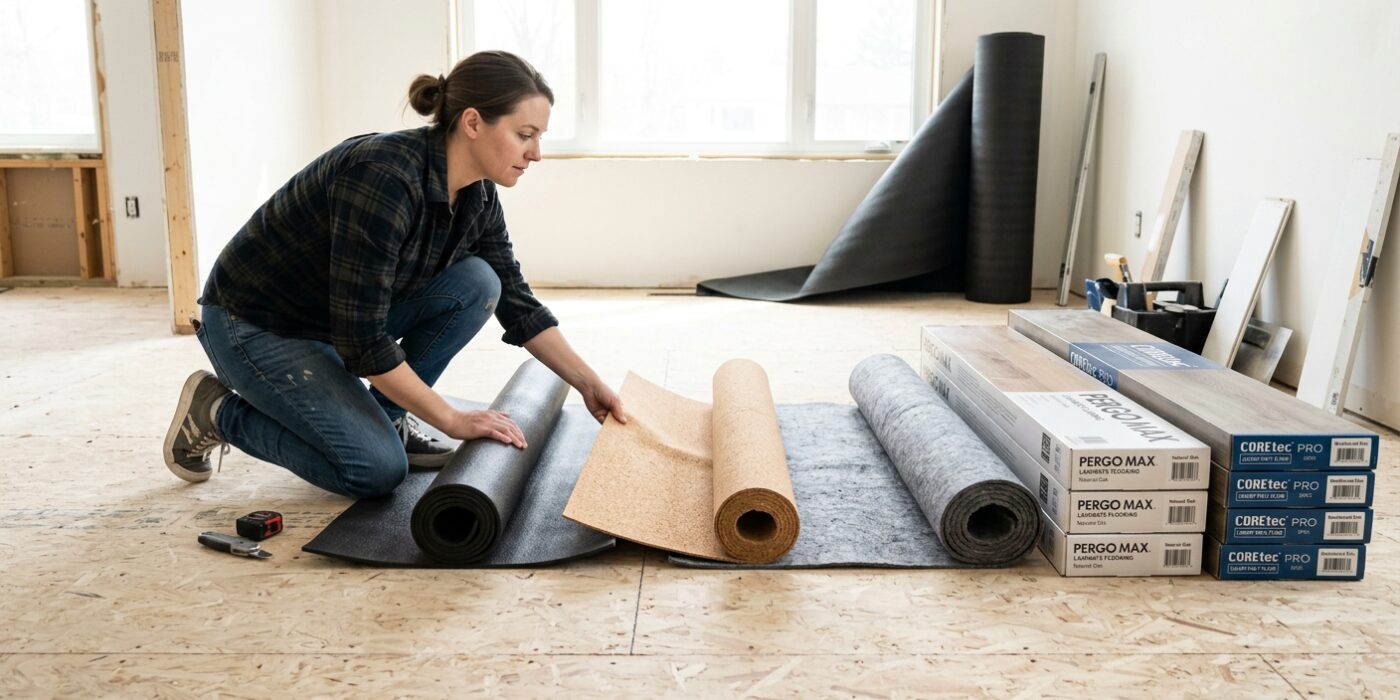
Project Shopping List
Underlayment is one of the most confusing decisions in any flooring project – the options seem endless, manufacturers all claim theirs is the best, and much of the advice online conflicts. But the underlying logic is simple: underlayment does three jobs (moisture protection, sound reduction, and leveling minor subfloor imperfections), and different flooring types need different combinations of those three functions.
This guide cuts through the confusion with clear recommendations for the three most common floating floor types: luxury vinyl plank (LVP), laminate, and engineered/solid hardwood. By the end, you’ll know exactly what to buy and what to avoid.
The Three Jobs of Underlayment
Before choosing, understand what you actually need. Moisture vapor barrier prevents concrete slab moisture from wicking up into the flooring – critical for LVP and laminate, especially on grade or below grade. Sound reduction (IIC and STC ratings) dampens impact sound and airborne sound transmission – important in multi-story homes. Minor leveling fills very small (under 3/16 inch) surface irregularities – note that this is no substitute for actual floor leveling work.
What You’ll Need
- Underlayment product appropriate to your floor type
- Tape (specifically designed for the underlayment type)
- Utility knife
- Tape measure
- Moisture meter (to verify need for moisture barrier)
LVP (Luxury Vinyl Plank) Underlayment
Key Requirement: Thin and Firm
Many LVP products come with underlayment pre-attached. If yours does, do not add another underlayment layer on top – stacking creates a spongy surface that stresses the click-lock joints and voids the warranty. If your LVP doesn’t have attached underlayment, use a thin (1–2mm) foam or cork underlayment rated for vinyl.
Moisture Barrier for LVP
Over concrete, LVP always needs a moisture vapor barrier – even though LVP is waterproof itself, water vapor can get trapped under it and cause mold in the underlayment or adhesive. Use either a 6-mil poly sheeting vapor barrier taped at seams, or a combination foam/moisture barrier product. Tape all seams with moisture barrier tape, not regular painter’s tape. Over wood subfloor, a standard foam underlayment without a vapor barrier is fine.
What to Avoid with LVP
Avoid thick underlayments (over 3mm) under LVP – the planks flex over thick underlayment, which cracks the locking tongue over time. Also avoid cork underlayment thicker than 2mm under click-lock LVP for the same reason. Never use organic felt underlayment under LVP – it holds moisture and can grow mold.
Laminate Underlayment
Standard Foam Works Well
Laminate flooring benefits from 3mm foam underlayment – it cushions the floor for comfort, provides moderate sound reduction, and adds a small amount of thermal value. Standard polyethylene foam underlayment is the baseline. Look for a product with a minimum IIC (Impact Insulation Class) rating of 60 if you’re on an upper floor where sound transmission matters to people below.
Combination Products Save Steps
Combination foam/vapor barrier products (foam with a plastic film bonded to the bottom) are the most popular choice for laminate over concrete. They eliminate the separate vapor barrier step and are less likely to shift during installation than separate products. Tape all seams per manufacturer instructions.
Acoustic Underlayment for Laminate
For maximum sound reduction, use a cork or rubber-based acoustic underlayment under laminate. These provide significantly better IIC and STC ratings than foam. Cork underlayment (3–6mm) is the most popular DIY choice – it’s naturally mold-resistant, comfortable underfoot, and provides good acoustic performance. Expect to pay $0.50–$1.00 per square foot versus $0.15–$0.25 for basic foam.
Hardwood Underlayment
Floating Engineered Hardwood
Floating engineered hardwood requires a thin, firm underlayment – 1–3mm foam or 1/8-inch cork. Hardwood products have more specific requirements than laminate because the tongue-and-groove joints are tighter and less forgiving of excessive flex. Check your manufacturer’s specs for maximum underlayment thickness – exceeding it voids the warranty.
Glue-Down and Nail-Down Hardwood
Solid hardwood and glue-down engineered hardwood do not use traditional underlayment. Solid hardwood is nailed or stapled directly to a wood subfloor with no underlayment layer. Glue-down engineered hardwood bonds directly to the subfloor or an approved adhesive layer. For these installations, sound improvement comes from the subfloor assembly, not underlayment.
Rosin Paper for Nail-Down Hardwood
Rosin paper (building felt) is the traditional material installed under nail-down hardwood. It’s not a moisture barrier – it’s a slip sheet that prevents squeaking from the boards moving against the subfloor. In humid climates, add a vapor retarder under the rosin paper when installing over concrete-adjacent subfloors.
Pro Tips
- Roll underlayment perpendicular to the direction the flooring will run – this minimizes the chance that underlayment seams align with flooring seams, which can telegraph as slight height variations.
- In condos or apartments, check HOA requirements before buying – many HOAs specify minimum IIC ratings (typically 65–72) that standard foam won’t meet. Premium acoustic underlayment may be required.
- Don’t overlap underlayment seams – butt them tightly together and tape. Overlapping creates a raised ridge that can telegraph through click-lock flooring as a high spot.
- On stairs, use a thin foam underlayment if the stair-nose product requires it, but many stair installations go directly on the tread substructure without underlayment.
Frequently Asked Questions
Is the pre-attached underlayment on LVP good enough, or should I add more?
The pre-attached underlayment on quality LVP products is engineered specifically for that product and is sufficient for wood subfloor applications. The one exception is moisture protection – if you’re installing over concrete, add a 6-mil poly moisture barrier under the LVP even if it has attached underlayment. The pre-attached foam won’t stop vapor transmission on its own.
My neighbor’s kids sound like elephants through our ceiling. Will better underlayment help?
Somewhat, but don’t expect miracles from underlayment alone. Impact sound (footsteps) travels primarily through the structure – joists, subfloor, drywall ceiling below – and underlayment only addresses the first inch of that path. Upgrading from foam to acoustic cork underlayment might drop perceived sound by 20–30%. For dramatic improvement, the ceiling below also needs work (resilient channels or acoustic drywall).
Can I reuse underlayment from my old floor?
Foam underlayment compresses over time and won’t return to its original thickness after years under a floor. Reusing it creates an uneven base for your new floor and risks moisture contamination from the old installation. Underlayment is inexpensive – always install fresh material with a new floor.