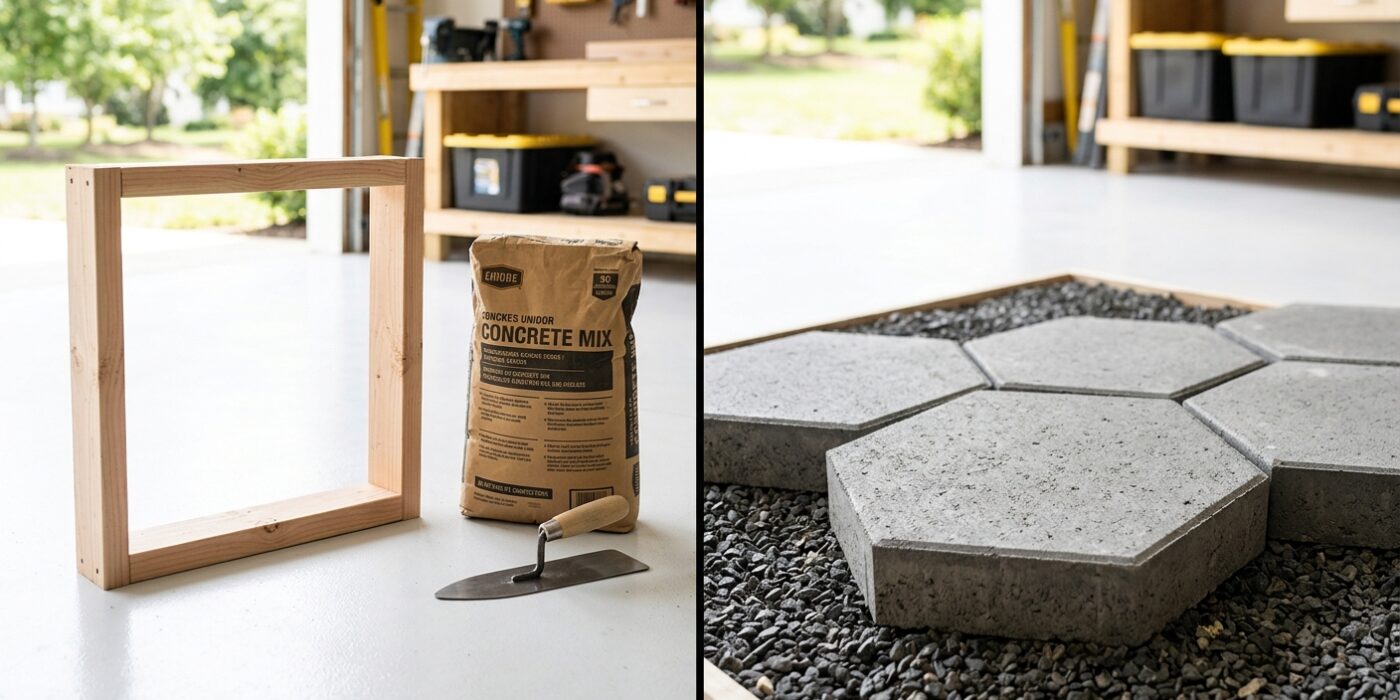
Project Shopping List
A concrete stepping stone path through a lawn or garden is practical, low-maintenance, and gives a finished, intentional appearance to outdoor space. You can pour custom-sized stones in any shape using simple forms, or purchase pre-cast stones and set them properly in the ground. The key to a path that stays level and does not rock underfoot is setting each stone in a compacted sand or gravel bed — not just laid on top of the soil.
What You Need
- Stepping stones (purchased, 18-24 inches wide) or molds for pouring your own
- Coarse sand or crushed stone for bedding
- Shovel and flat spade
- Level and rubber mallet
- Concrete mix and a form (for pouring custom stones)
Part 1: Pouring Custom Stepping Stones
Step 1: Build or Buy Molds
Form molds from 2×4 lumber cut into squares or rectangles, screwed at the corners. A 16×16-inch square made from 2×4 pieces produces a stone about 3.5 inches thick — heavy but durable. Spray the inside of the form with vegetable oil or form release for easy removal. You can also use cardboard box bottoms lined with plastic sheeting, or purpose-made stepping stone molds from a craft or garden center.
Step 2: Mix and Pour Concrete
Mix concrete per bag directions to a consistency that holds its shape when squeezed — not sloppy wet. Pour into the mold, spread to fill corners, and tap the sides to remove air pockets. Level the top surface with a scrap board. Add decorative aggregate, glass, or impressions (shells, leaves, handprints) to the surface within 30 minutes of pouring, while the concrete is still workable. Cover with plastic and let cure 24-48 hours before removing the form. Full strength takes 28 days — avoid heavy impact for the first week.
Part 2: Setting Stones in a Path
Step 3: Lay Out the Path
Walk the planned path and mark the stone locations with spray paint or sand. A natural walking stride is typically 24-30 inches from stone center to stone center — test this by walking normally and marking where your feet land. Curved paths look more natural than straight ones in most garden settings. Lay the stones on top of the grass first to visualize the spacing and adjust before digging.
Step 4: Excavate Each Stone Location
Trace around each stone with a flat spade and cut the outline into the grass. Remove the stone and excavate 4-5 inches deep. Remove all roots, rocks, and debris. The finished stone surface should sit 1 inch above the surrounding lawn — this allows mowing over the stone without catching the blade. If the stone sits higher, tires of a riding mower will hit it; if it sits flush, the stone will sink below grade over time as the surrounding soil compresses from foot traffic.
Step 5: Set the Sand or Gravel Bed
Pour 2-3 inches of coarse sand or fine crushed stone into the excavated hole. Compact with a hand tamper. Set the stepping stone on the bed and press firmly. Check level — the stone should be level or slope very slightly with the surrounding ground. Adjust the sand bed depth until the stone sits at the correct height. Wiggle the stone to test stability — it should not rock at all. If it does, remove it, adjust the bed, and reset.
Step 6: Fill the Gaps
Fill around each stone with the excavated soil, tamping it firmly around the edges. Pack soil tightly to prevent the edges of the stone from cracking if someone steps on the corner. Sow grass seed or install creeping plants between stones for a more finished, integrated look. Creeping thyme, Irish moss, or creeping phlox planted between stones fill in within one season and release fragrance when stepped on.
Pro Tips
- Avoid a perfectly straight, even-spaced path — it looks artificial. Vary spacing slightly and add a gentle curve for a more natural appearance.
- If you pour your own stones, color the concrete with integral pigment (iron oxide powder mixed into the batch) rather than painted surface color — pigmented concrete color lasts indefinitely; painted concrete fades within two years.
Frequently Asked Questions
How thick should stepping stones be?
A minimum of 2.5-3 inches for a stone that will support adult foot traffic. Thinner stones crack. If using natural flagstone rather than concrete, choose stones at least 1.5 inches thick for durability — thin flagstone fractures surprisingly easily under point loads.
Do I need to use sand under stepping stones?
A bedding material is essential. Stones placed directly on soil will sink unevenly as the soil compresses and decompresses with moisture and freeze-thaw cycles. Coarse sand or fine gravel allows some adjustment for leveling while providing stable, well-draining support.