Project Shopping List
Staining and sealing a wood deck every 2-3 years protects against UV graying, water damage, and splintering. A deck stripped to bare wood and properly restained can look nearly new regardless of age. The prep work takes longer than the actual staining, but it is what determines whether the stain lasts one season or three.
What You Need
- Deck cleaner or deck stripper (if removing old finish)
- Pressure washer (1500-2500 PSI)
- Orbital sander or pole sander with 60-80 grit for rough boards
- Deck stain (semi-transparent or solid)
- Paint roller with extension pole and 3/8-inch nap
- Brush for rails, balusters, and between-board gaps
- Plastic sheeting to protect plants and siding
Choosing a Stain
Semi-transparent stain shows wood grain, protects against UV, and looks natural — best for decks with attractive wood. It needs re-application every 2 years. Solid stain hides the grain, provides maximum color coverage, and lasts 3-5 years — best for decks with weathered, checked, or stained boards where appearance of grain is not important. Solid stain also provides more UV and moisture protection. For decks with composite or heavily weathered wood, solid stain is the practical choice.
Step-by-Step Instructions
Step 1: Clear and Protect
Remove all furniture, grills, and planters. Sweep thoroughly. Cover adjacent siding, plants, and landscaping with plastic sheeting — deck cleaner and stain damage plants and siding. Tape plastic along the house wall at the deck surface level.
Step 2: Strip Old Finish If Needed
If old stain is peeling, flaking, or built up in thick layers, it must be removed before re-staining. Apply a deck stripper per product directions and scrub with a stiff brush. Rinse thoroughly. New stain will not bond over old peeling finish — this is the most common reason deck stain fails within one season. If the existing finish is faded but not peeling, a deck cleaner (without stripper) prepares the surface adequately.
Step 3: Clean with Deck Cleaner
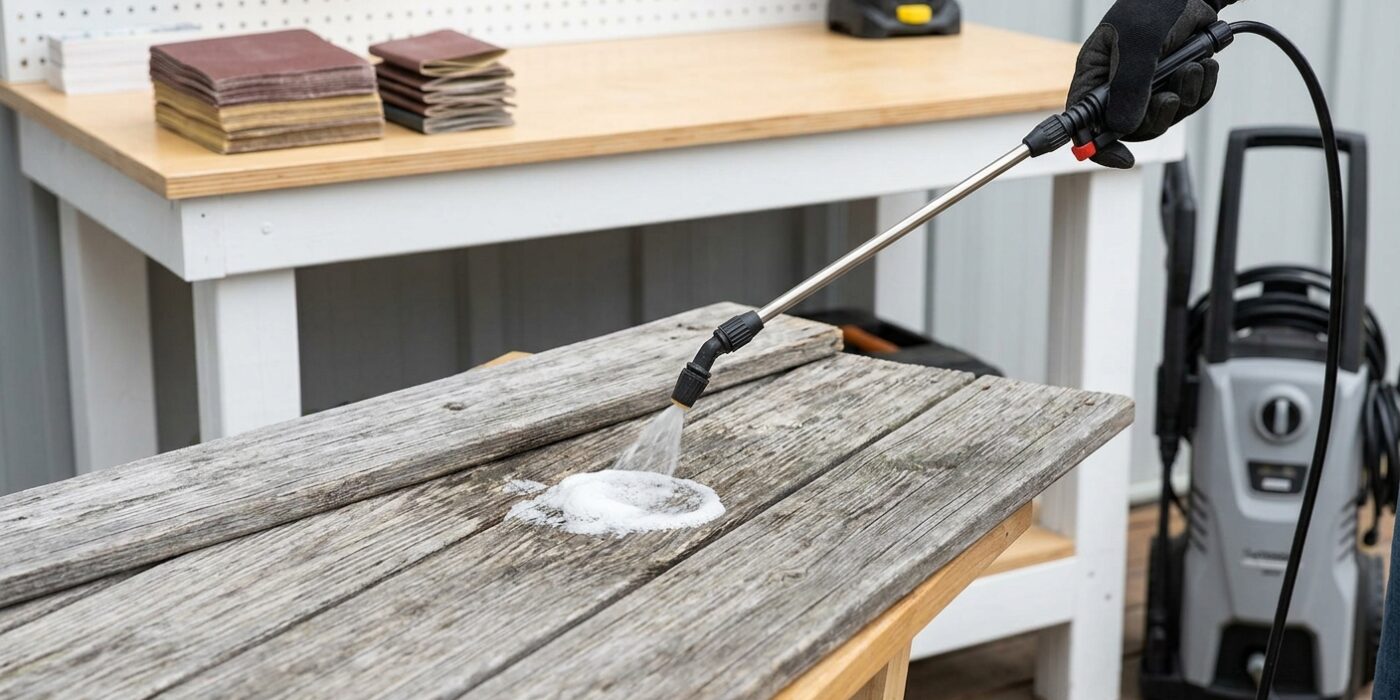
Apply deck cleaner diluted per directions to the entire surface. Scrub with a stiff brush to work it into the grain. Let sit 10-15 minutes. Pressure wash at 1500-2000 PSI (a 25-degree nozzle is safe for most wood decks — a 0-degree nozzle damages the wood fiber). Always spray in the direction of the grain, not across it. Rinse completely and allow the deck to dry for 48-72 hours. Staining wet wood is the second most common cause of early stain failure.
Step 4: Sand Problem Areas
Sand any boards with raised grain, splinters, or rough texture with 60-80 grit paper. Sand with the grain. Boards that feel rough after cleaning and drying absorb stain unevenly and feel unpleasant underfoot when dry. A random orbital sander with an extension handle covers large areas quickly. Re-clean the sanded areas with a tack cloth or leaf blower to remove all sanding dust before staining.
Step 5: Apply Stain
Stain in the shade or on a cloudy day — direct sun evaporates stain before it penetrates and causes lap marks. Work on 2-3 boards at a time, applying with a roller and immediately working the stain into gaps and edges with a brush. Maintain a wet edge — do not stop in the middle of a board or you will get lap marks where the dry and wet sections meet. For balusters and rails, apply stain with a brush and keep a wet rag to catch drips before they dry on the deck surface below.
Step 6: Apply Second Coat
Semi-transparent stains typically require one coat on weathered, porous wood and two coats on dense or previously finished wood. Solid stains typically require two coats. Apply the second coat the same day after the first coat has dried to the touch (usually 2-4 hours) but before it has fully cured. Two thin coats penetrate better than one thick coat.
Pro Tips
- Oil-based deck stains penetrate more deeply than water-based and are more durable in high-traffic areas, but require mineral spirits for cleanup and have higher VOC content. Water-based stains have improved dramatically and are adequate for most residential decks.
- Stain the underside of deck boards and the structural framing while doing the surface — unfinished wood under a deck absorbs moisture and causes faster decay than any other factor.
Frequently Asked Questions
How do I know if my deck needs stripping or just cleaning?
Splash a small amount of water on the deck surface. If it beads up, the old finish is still intact and just needs cleaning and a fresh coat. If water absorbs immediately, the finish is gone and the wood is bare — clean and restain. If old stain is peeling or flaking when you scrape it, stripping is required before any new coat will adhere.
My deck stain peeled after one season. Why?
The most common causes in order: staining over wet wood, staining in direct sunlight, applying stain over old peeling finish, or applying stain over a surface that still had mold or mildew. The mildewcide in deck cleaners must be allowed to fully work and then rinsed completely — mildew under new stain causes it to peel as the mildew continues to grow.