Project Shopping List
Choosing exterior paint is more consequential than choosing interior paint — a bad interior choice can be repainted in a weekend, but exterior paint failure means scraping, priming, and repainting the entire house at significant cost. The selection affects durability (how long the paint lasts), adhesion (how well it bonds to the surface), and appearance (how good it looks for years, not just on the first day).
Sheen Selection
Exterior paint comes in flat, satin, semi-gloss, and gloss sheens. Flat paint hides surface imperfections well and is traditionally used on siding, but it is harder to clean and traps dirt. Satin (also called low-luster or eggshell) is the most popular choice for siding — it is slightly washable, resists mildew better than flat, and hides minor imperfections reasonably well. Semi-gloss and gloss are used on trim, doors, and architectural accents where durability and cleanability matter more than hiding imperfections.
Paint Formulation: 100% Acrylic vs Vinyl Acrylic
The two main types of exterior paint are 100% acrylic and vinyl-acrylic (also called latex). 100% acrylic paint is more flexible, more durable, and more resistant to cracking and peeling as the substrate expands and contracts with temperature changes. It costs more but lasts significantly longer — 10 to 15 years vs 5 to 7 years for vinyl-acrylic on wood siding. For any painted exterior surface that experiences significant temperature swings, 100% acrylic is worth the premium.
Color Selection Process
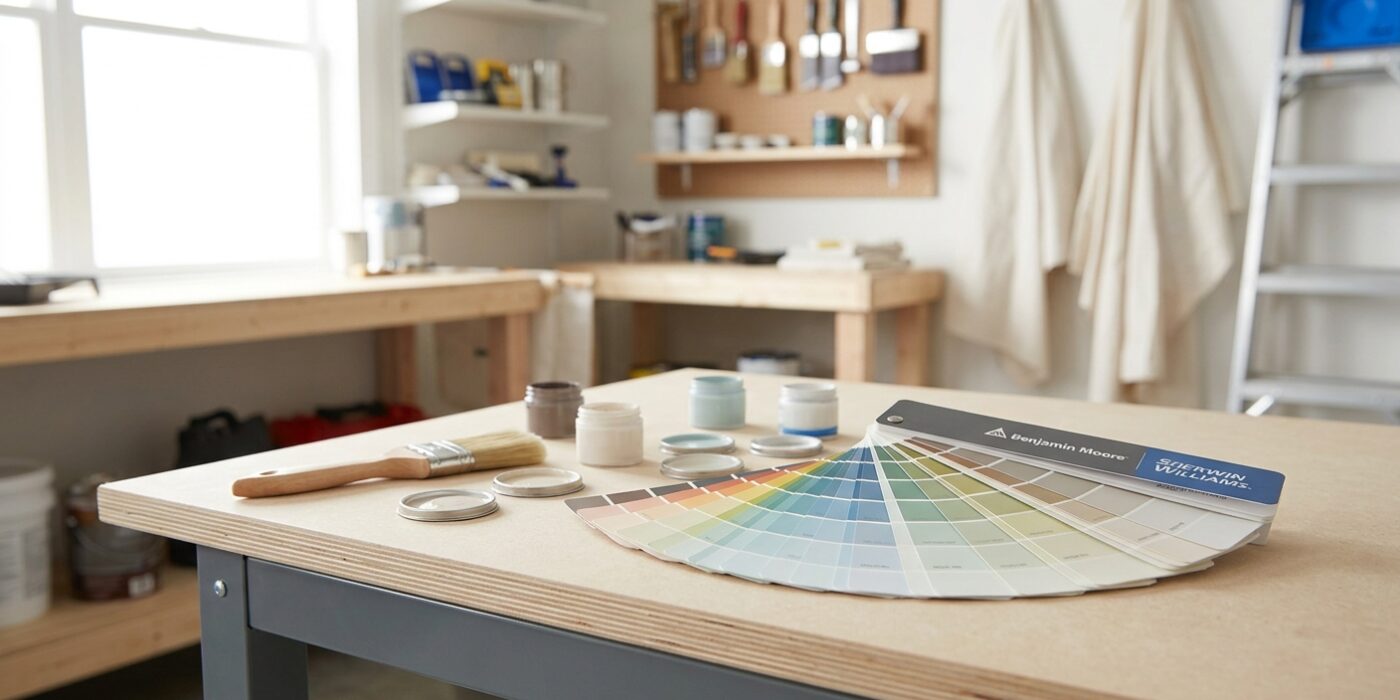
Do not select exterior paint colors from a chip in the store. Take home three to five sample pots and paint 12×12 inch swatches on the actual house in two locations: one in full sun and one in shade. Observe each color at different times of day and in different weather conditions. Exterior colors look dramatically different in direct sunlight versus overcast light. Live with the samples for at least three days before committing.
Brand and Quality Tiers
Premium exterior paints (Sherwin-Williams Emerald Exterior, Benjamin Moore Aura Exterior, PPG Diamond Exterior) cost $60 to $80 per gallon and carry 25-year warranties. Mid-range products cost $50 to $65 per gallon and are rated for 15 to 20 years. Budget exterior paints under $40 per gallon carry 5 to 10 year warranties and typically have lower pigment loading, meaning thinner coverage and less durability. Buy the best paint your budget allows — the paint cost is a small fraction of the labor cost of painting a house.
Primer Selection
Never apply finish coat paint directly to bare wood, bare metal, or previously failed paint without priming. For bare wood: oil-based primer penetrates and seals the wood grain far better than water-based primer. For previously painted surfaces in good condition: a quality water-based bonding primer works. For chalky or weathered paint: wash first with a TSP solution, then use an exterior bonding primer specifically rated for chalky surfaces.
Pro Tips
- Dark exterior colors absorb more heat and cause paint to expand and contract more severely, accelerating peeling. In hot climates, choosing medium tones extends paint life.
- Purchase all your paint from a single batch (same lot number) to ensure color consistency. If you need a second lot, buy an extra can to blend between batches.
- Tinted primers (tinted to roughly match the finish color) improve coverage dramatically when applying light paint over dark, or dark paint over light, saving one full coat of finish paint.
FAQ
My existing paint is chalky (comes off on my hand when I rub it). Can I paint over it? Not without washing and special priming. Wash with a TSP solution and rinse well. Then use an exterior bonding primer rated for chalky surfaces before the finish coat. Paint applied directly over chalk will fail adhesion and peel quickly.
Can I use interior paint outdoors? No. Interior paint lacks the UV inhibitors and flexible resins that exterior paint requires. It will fade, chalk, crack, and peel rapidly when exposed to sunlight and weather.