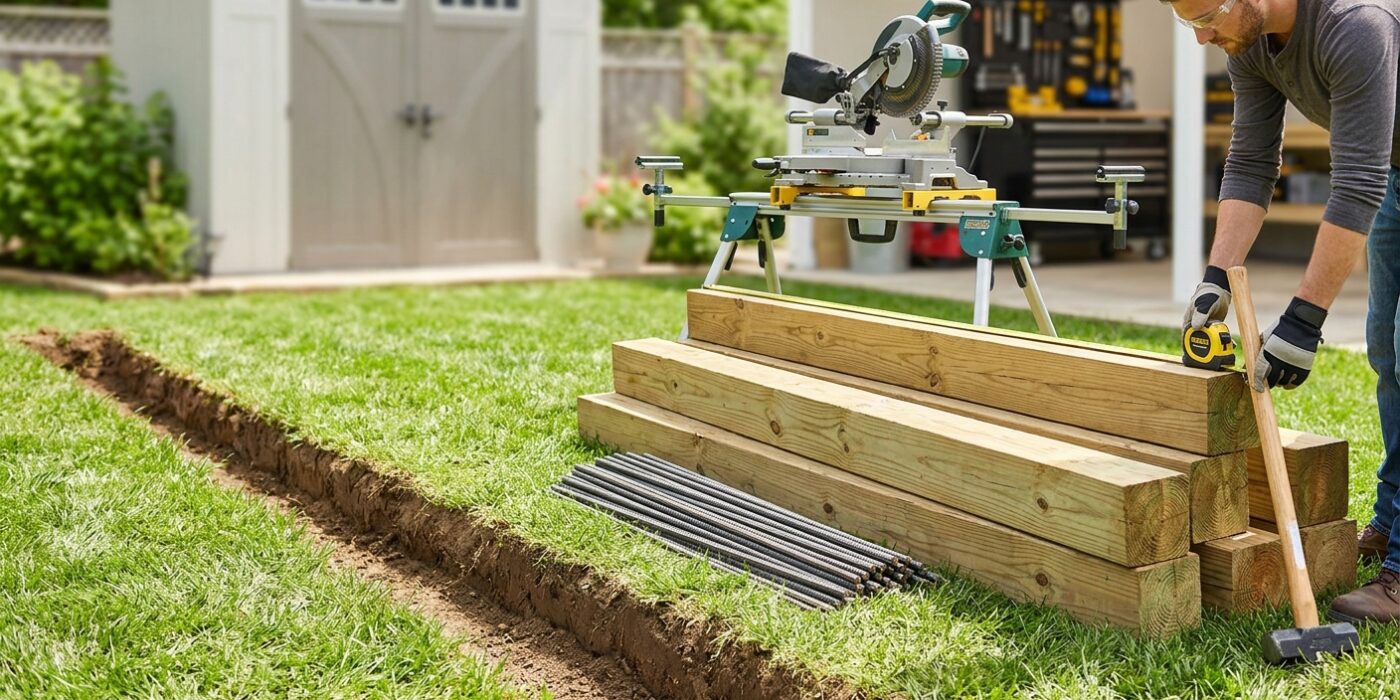
Project Shopping List
Landscape timber edging defines planting beds, keeps mulch from migrating into the lawn, and creates a clean, structured boundary between different yard areas. Pressure-treated 4×4 or 6×6 timbers set in the ground outlast plastic edging by decades and give a bold, substantial appearance that suits cottage gardens, vegetable beds, and woodland plantings alike.
What You Need
- 4×4 or 6×6 pressure-treated landscape timbers (ground-contact rated, UC4B)
- Landscape spikes or rebar (12-18 inch sections, 1/2-inch diameter)
- Hand sledge or post driver
- Chainsaw or circular saw for cutting
- Drill (for drilling spike holes)
- Level and string line
- Shovel
Step-by-Step Instructions
Step 1: Plan the Edging Layout
Mark the edging outline with spray paint, a garden hose, or string and stakes. For straight runs, a string line gives the cleanest result. For curves, a garden hose laid on the ground in the desired shape lets you adjust the curve before committing to digging. Stand back and view the outline from a distance before excavating — curves that look right from ground level often look awkward from a slightly elevated viewpoint.
Step 2: Excavate the Timber Trench
Dig a shallow trench along the marked line to accept the timber. For 4×4 timbers, dig 2-3 inches deep — just enough to set the timber so its top is 2-3 inches above grade, giving adequate mulch-retention height. For 6×6 timbers, excavate 4-6 inches deep. The trench bottom should be level so the timber sits consistently throughout its length without rocking.
Step 3: Set the First Timber
Lay the first timber in the trench and check it for level along its length. Adjust the trench depth under high spots. For a straight run, pull a string line from corner to corner and align the timber to the string. For curves, the timber can be angled at corners rather than bent — cut timbers at complementary angles to create smooth transitions around bends.
Step 4: Spike Timbers to the Ground
Drill 1/2-inch holes through each timber at 4-foot intervals. Drive 12-18 inch lengths of 1/2-inch rebar through the holes and into the soil to anchor each timber. The rebar holds the timber firmly against lateral movement from frost heave, foot traffic, and soil expansion. Pre-drilling the hole makes driving the rebar much easier — driving rebar through an undrilled hole splits the timber. At corners where timbers overlap, drive a spike through both pieces at the overlap.
Step 5: Stacking Timbers for Taller Edging
For raised beds or terraced edging over 6 inches tall, stack timbers in an offset pattern (stagger the end joints like brickwork). Connect courses with 12-inch landscape screws or TimberLOK fasteners driven at 45-degree angles through each upper timber into the one below. Rebar through the stack and into the soil provides lateral resistance at stacked heights. Stack up to three courses of 4×4 (12 inches total) without additional structural support.
Step 6: Backfill and Mulch
Backfill the trench on both sides of the timber with the excavated soil and tamp firmly. The timber should feel completely stable with no rocking. Add mulch to the planting bed side to the top of the timber — 3-4 inches of mulch retained by the edging conserves moisture and suppresses weeds. Leave a 1-inch gap between mulch and any tree or shrub stems to prevent rot.
Pro Tips
- Use ground-contact rated lumber (UC4B) for any timber in contact with soil — timbers rated for above-ground use only (UC3B) will decay within 3-5 years in direct soil contact.
- Cut timbers with a chainsaw for fast, clean cuts — a circular saw requires multiple passes on a 6×6 timber and leaves a rough cut. A chainsaw makes the same cut in one pass.
- Apply a coat of wood preservative end-sealer to all cut ends before installation — cut ends are the most vulnerable point for moisture intrusion and rot.
Frequently Asked Questions
How long do landscape timbers last in the ground?
UC4B pressure-treated timbers in direct soil contact last 30-40 years. Standard UC3B timbers last 5-15 years in ground contact before decaying. Cedar and redwood landscape timbers without treatment last 10-20 years depending on local soil moisture. The investment in ground-contact rated material pays for itself many times over compared to replacing decayed timbers every few years.
Can I use railroad ties for landscape edging?
Old railroad ties (treated with creosote) are no longer recommended for garden use — creosote is a known carcinogen and can leach into soil near edible plants. If using them for purely decorative edging away from food gardens, they are structurally sound. New landscape timbers treated with modern preservatives are the better choice for any planting bed.