Project Shopping List
A gravel patio costs less than any other hardscape, installs in a weekend, and drains perfectly — no standing water after rain. The keys to a gravel patio that stays in place, does not track into the house, and stays weed-free are proper edging, adequate depth, and the right gravel type. Pea gravel and crushed granite are the most common choices; each has distinct characteristics.
What You Need
- Shovels and wheelbarrow
- Plate compactor or hand tamper
- Landscape edging (metal, plastic, or stone border)
- Landscape fabric (weed barrier)
- Gravel: pea gravel or crushed granite — 4 inches deep (1 ton covers roughly 80 sq ft at 3 inches)
- Sand (optional, for leveling base)
- Level and string line
Step-by-Step Instructions
Step 1: Mark and Excavate
Mark the patio outline with spray paint or a garden hose. Excavate 5-6 inches below finished grade: 1 inch for the gravel to sit below the surrounding grass or edging, plus 4 inches of gravel depth. Remove all sod and organic material. Slope the base slightly (1/8 inch per foot) away from any structures for drainage.
Step 2: Install Edging
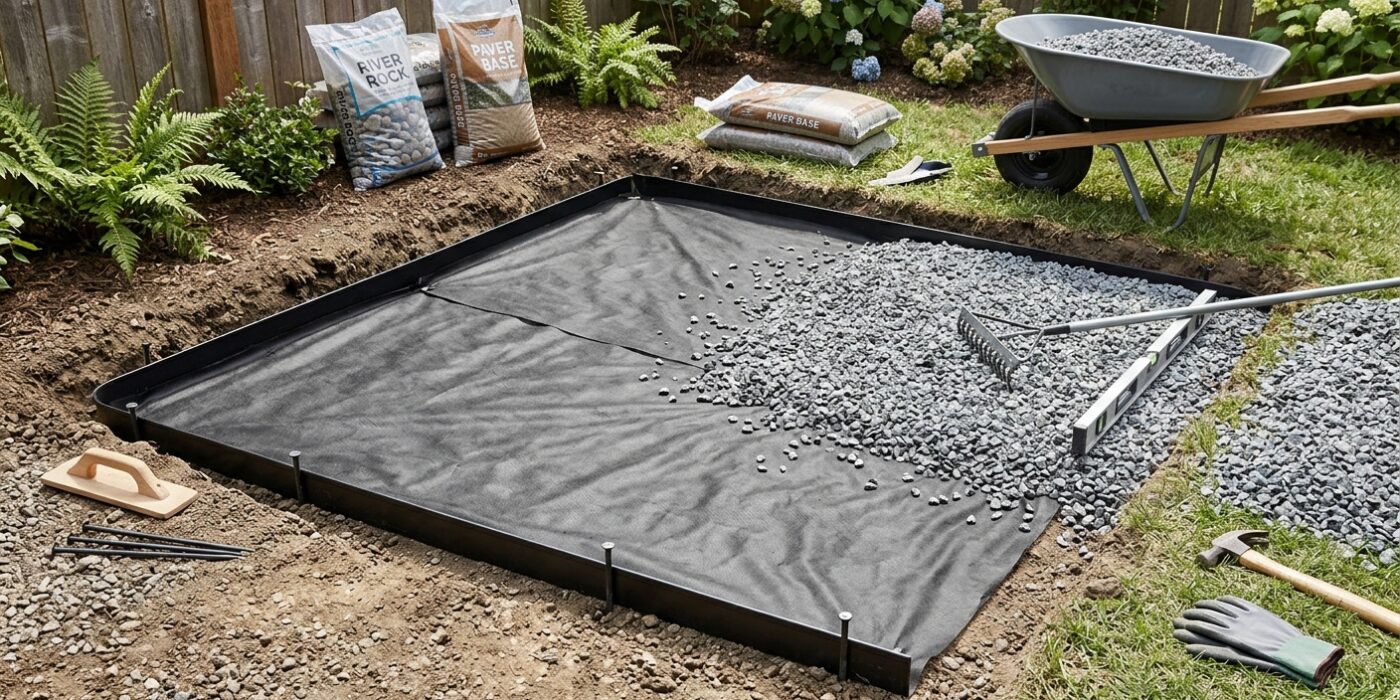
Edging is critical — it contains the gravel and prevents it from migrating into the lawn. Metal landscape edging (Everedge or equivalent) is the most durable and almost invisible when installed. Pound it into the ground with a rubber mallet along the patio perimeter. For a more decorative border, use stone, brick, or concrete pavers set in a shallow bed of sand. Make sure the edging top is at or slightly above the finished gravel surface height.
Step 3: Install Landscape Fabric
Roll out landscape fabric over the entire excavated area, overlapping seams by at least 6 inches. Landscape fabric allows water to drain through while blocking weed seeds from germinating below the gravel. Cut slits in the fabric for any trees or plants within the patio area. Pin the fabric to the soil with fabric staples every 2-3 feet, and along all edges. Do not use plastic sheeting instead of fabric — plastic prevents drainage and creates a skating rink surface.
Step 4: Choose and Order Gravel
Pea gravel (3/8-inch smooth rounded stones) is comfortable underfoot and looks natural. Its disadvantage: the rounded shape makes it shift and scatter more than crushed stone. Crushed granite or decomposed granite (angular gravel) compacts into a semi-firm surface that stays in place much better — it is the better choice for high-traffic areas and around furniture. Decomposed granite can even be compacted to a nearly solid surface with stabilizer added. Order 4 inches deep: calculate cubic feet (area x 0.33 ft depth) and divide by 27 for cubic yards, or convert to tons based on your supplier’s conversion factor (roughly 1.35 tons per cubic yard for gravel).
Step 5: Spread and Level Gravel
Dump gravel in several piles across the patio area and spread with a landscape rake. Work toward the edges, raking gravel evenly to 4-inch depth. Check depth frequently with a ruler or marked stake. The surface should sit 1/2 inch below the top of the edging so gravel does not spill over with the first footstep.
Step 6: Compact (Crushed Gravel Only)
Crushed or decomposed granite benefits from compaction with a plate compactor to lock the angular particles together. Run the compactor over the entire area in two passes at 90 degrees to each other. Add a thin top layer of loose gravel after compaction to restore a fresh appearance. Pea gravel does not compact — do not attempt to compact rounded stones.
Pro Tips
- Add a 1-inch layer of coarse sand under the gravel for a more stable base and improved leveling control.
- Lay a perimeter of pavers or flagstones just inside the edging to create a clean walking surface near the edge — this also prevents gravel from scattering onto the lawn with heavy foot traffic.
- Re-rake and top-dress with a thin layer of fresh gravel every 2-3 years to restore a clean appearance.
Frequently Asked Questions
Does a gravel patio need edging?
Edging is essential. Without it, gravel migrates into the lawn within one season, requiring constant raking and raking replacement. Metal landscape edging is the minimum; stone or brick borders look more finished and are equally functional.
Will weeds grow through gravel?
Weed seeds that blow in from above and land on top of the gravel will germinate — no barrier prevents airborne seeds. Landscape fabric prevents weeds from growing up from below. For minimal above-surface weeds, keep gravel at full depth (thinner gravel allows more sunlight to reach fabric and soil), and spot-treat with herbicide or hand-pull as needed.