How to Repair and Replace an Outside Corner Bead
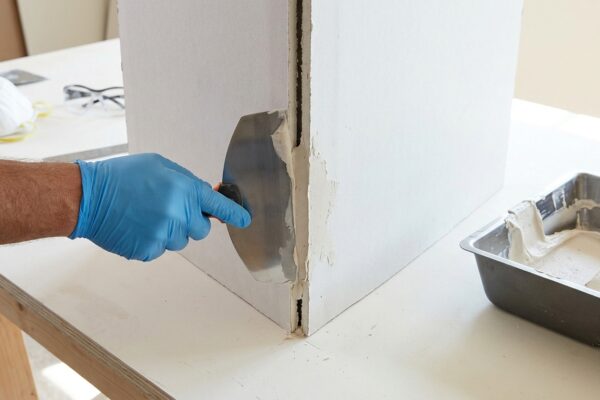
Outside corners of drywall – where two walls meet to form a projecting corner – are the most vulnerable part of any drywall installation.…
Browse all our Drywall guides and step-by-step tutorials. Each project includes a full shopping list, tools needed, and realistic cost and time estimates.
Outside corners of drywall – where two walls meet to form a projecting corner – are the most vulnerable part of any drywall installation.…
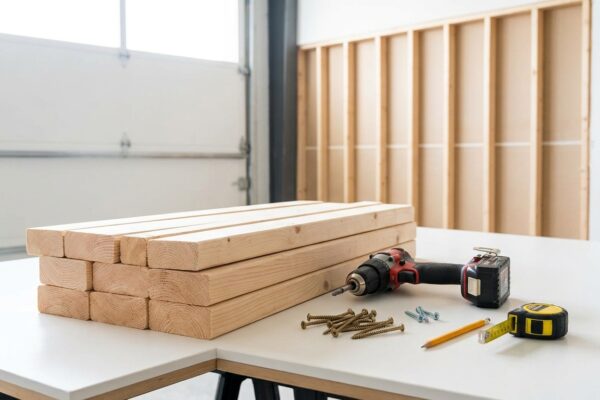
Drywall backing is blocking – extra framing material added between studs to support drywall edges, fixtures, and accessories that would otherwise have no solid…
Removing old drywall is necessary before rewiring, re-insulating, or remodeling. The task is physically demanding and dusty, but straightforward when done systematically. Sealing adjacent…
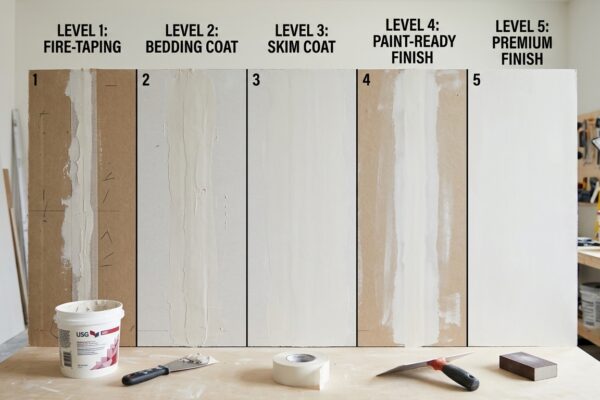
Drywall finishing levels are a standardized system (Level 0 through Level 5) that defines how much work is required before a surface is considered…
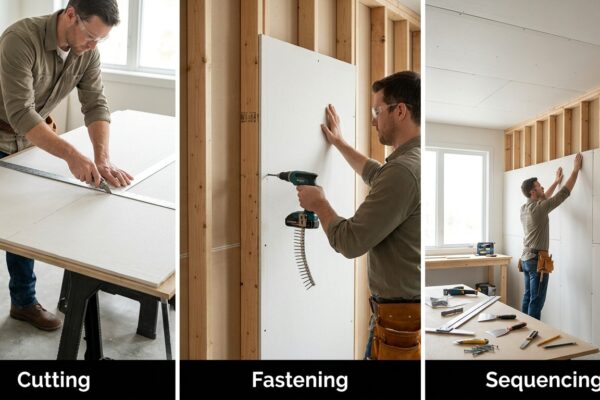
Cutting drywall cleanly and accurately is a fundamental skill for any drywall project. The good news is that drywall cuts with simple hand tools…
A drywall water stain or water-damaged section does more than look bad – it can harbor mold, the weakened gypsum provides little structural value,…
Patching a hole in drywall is one of the most common home repair tasks. Small holes from picture hooks are quick fixes; medium holes…
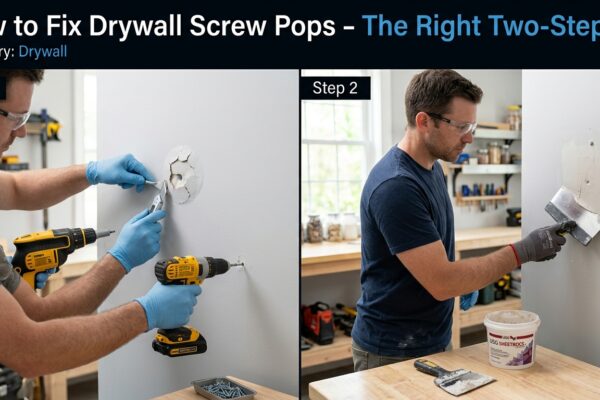
Drywall screws that pop out from the wall surface are one of the most common drywall complaints and one of the most common DIY…
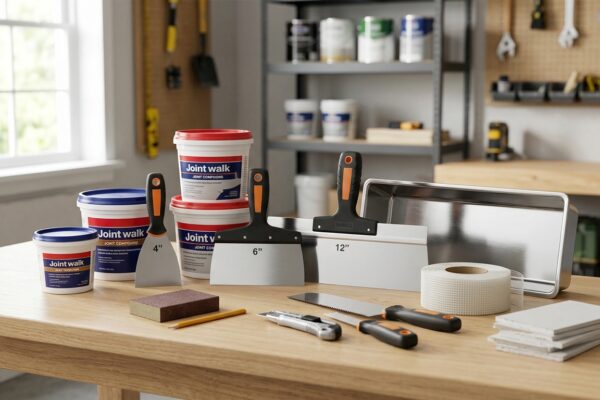
Taping drywall joints is the step that separates a rough, visible seam from a wall that looks perfectly smooth. The process has three coats…
Drywall – also called gypsum board or Sheetrock – is the standard interior wall and ceiling finish for residential construction. Hanging drywall is physically…
Hanging drywall is the starting point for every interior wall and ceiling finish project. The job is straightforward but physical — sheets are heavy…
Drywall damage comes in three sizes, and each size has a right method. Use the wrong method for the hole size – like bridging…